Neck Pain · Calgary
When Neck Pain
Keeps Coming Back
Neck pain can come from many different structures and can develop for many different reasons. When symptoms persist or repeatedly return, it may be worth looking beyond the painful area itself. Dr. Cody Gordon assesses the upper cervical spine and the mechanics of the neck to determine what may be contributing to the problem.
Calgary, Alberta
Understanding Persistent Neck Pain
Why Neck Pain Can Keep Coming Back
The neck is more than a stack of bones. It is a complex system of joints, muscles, ligaments and nerves that must work together to support the head while allowing a remarkable amount of movement.
Pain is often felt in tight or tender muscles, but the painful area is not always the only area worth examining. Muscles can tighten and compensate when the joints they support are not moving or functioning normally.
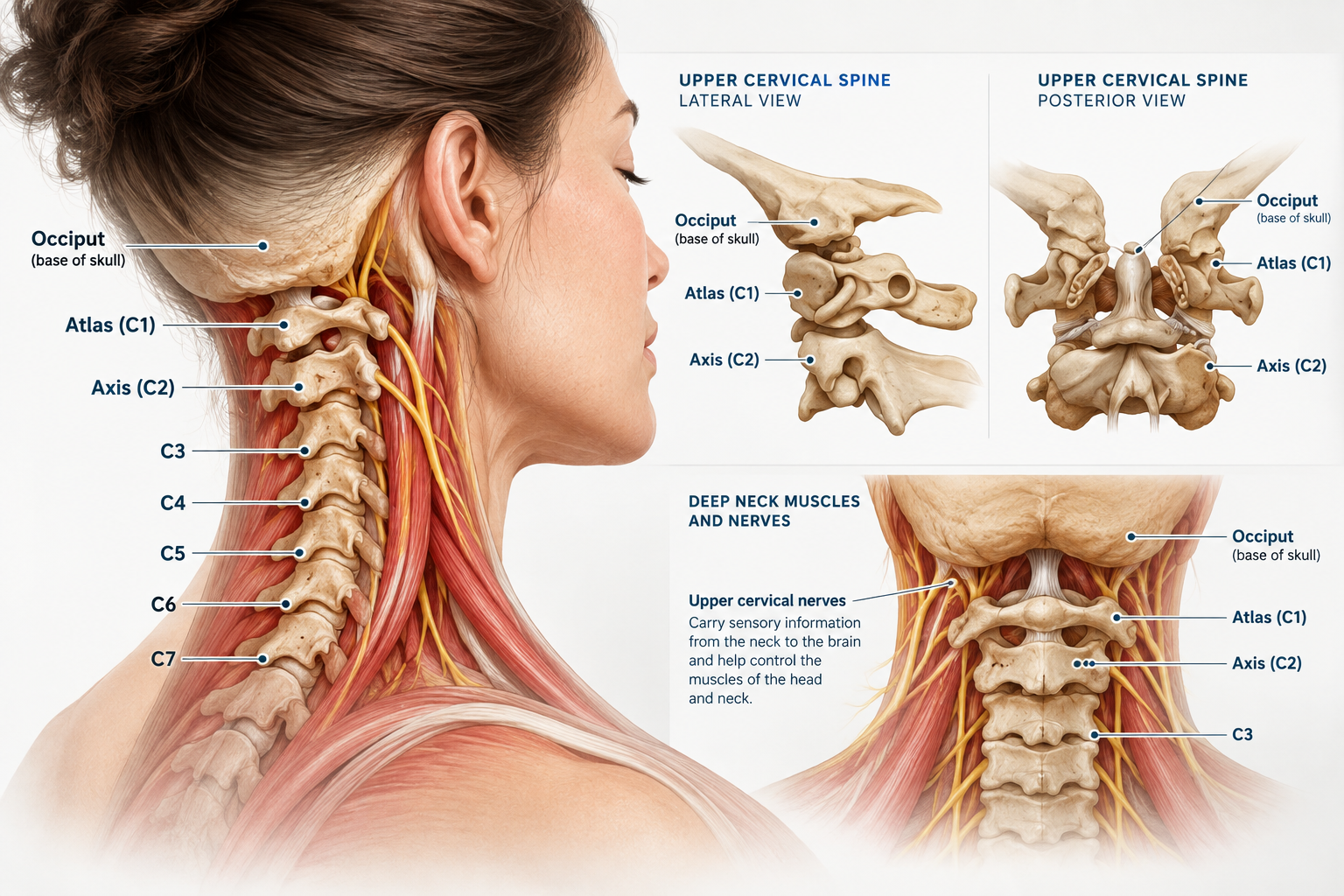
The upper cervical spine is particularly interesting because the atlas (C1) and axis (C2) are built very differently from the rest of the neck. Together with the base of the skull, these joints provide a large amount of the head's movement and contain an extensive network of sensory receptors involved in movement and position.
When neck pain repeatedly improves and then returns, simply addressing the area that hurts may not tell the whole story. A more complete assessment looks at alignment, joint mechanics, movement and muscular compensation throughout the cervical spine.
The goal is not to assume that every case of neck pain comes from the upper cervical spine. It is to determine whether dysfunction in this region may be contributing to the overall mechanical picture.
Video: Dr. Gordon Explains Why Neck Pain Can Keep Coming Back
A Different Approach to the Upper Cervical Spine
Where NUCCA Fits In
NUCCA focuses specifically on the relationship between the head and upper cervical spine — particularly the atlas (C1) and axis (C2).
Dr. Gordon evaluates the upper cervical region along with the mechanics of the rest of the neck to identify findings that may be relevant to a patient's pain, movement or recurring muscular tension.
When appropriate, NUCCA uses a gentle, highly specific correction designed to improve upper cervical alignment and mechanics without twisting, cracking or forceful manipulation of the neck.
The question isn't simply:
“Where does my neck hurt?”
It may also be worth asking:
“Why does my neck pain keep coming back?”
Book a Consultation →