NUCCA Chiropractor in Calgary
Dr. Cody Gordon provides NUCCA upper cervical chiropractic care in Calgary, Alberta. With more than 20 years of experience working with the upper cervical spine, Dr. Gordon offers a gentle, highly specific approach to chiropractic assessment and care.
NUCCA focuses on the relationship between the skull, atlas (C1), and axis (C2) at the top of the neck. When clinically appropriate, this approach uses a precise correction without twisting or forceful manipulation of the neck.
The upper cervical spine supports the head, allows movement, and surrounds the transition between the brainstem and spinal cord. Dr. Gordon has dedicated more than two decades of clinical practice to understanding and evaluating this complex region.
There Is a Lot Happening
in a Very Small Space
The relationship between your skull, atlas and axis is unlike any other region of your spine.
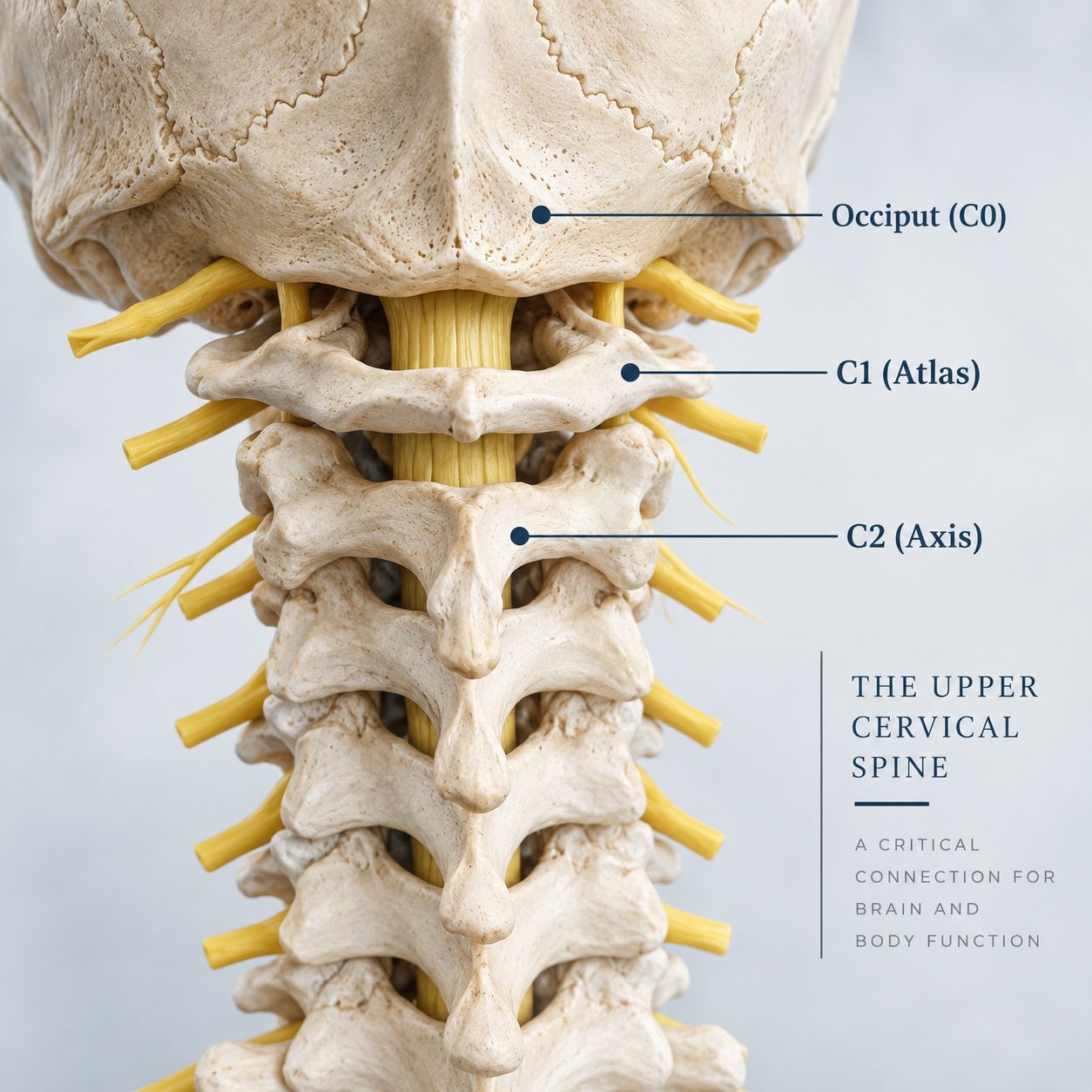
The upper cervical spine is built differently from the rest of your neck. The skull rests on the atlas (C1), while the atlas sits over the axis (C2), creating a remarkably mobile and specialized junction between your head and neck.
A substantial amount of the neck's rotation occurs at C1–C2, while the joints between the skull and upper cervical spine allow you to nod, turn and precisely position your head.
Deep beneath the larger muscles of the neck is a small group of suboccipital muscles connecting the skull, C1 and C2. These muscles contain an unusually high concentration of muscle spindles — sensory receptors involved in detecting movement and position.
And this anatomy exists immediately around an extraordinarily important transition: the brainstem continues into the spinal cord at the base of the skull, surrounded by specialized joints, muscles, ligaments, nerves and blood vessels.
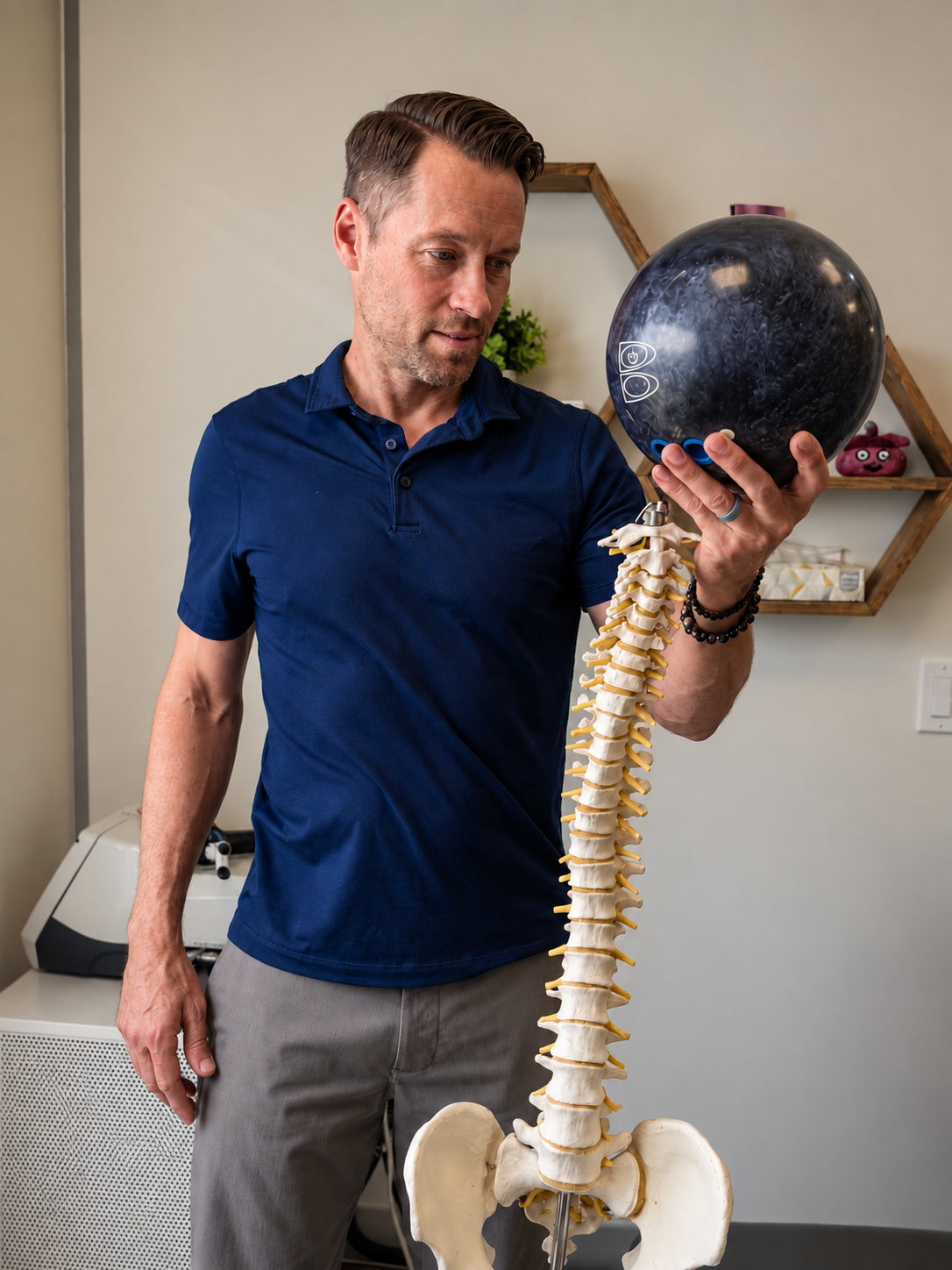
This is why Dr. Gordon doesn't view C1 and C2 as simply two more bones in the neck.
After more than two decades working with the upper cervical spine, Dr. Gordon looks carefully at the alignment and mechanics of this region and whether dysfunction here may be an important part of what a patient is experiencing.
NUCCA was developed specifically to evaluate the relationship between the head and upper cervical spine and, when indicated, address this region with a highly precise approach.
So What Exactly
Is NUCCA?
NUCCA is a highly specific approach to upper cervical chiropractic care focused on the relationship between the head and the top of the neck.
Rather than simply adjusting the area that hurts, NUCCA gives Dr. Gordon a systematic way to examine the upper cervical region, analyze what he finds and determine whether a precise correction is appropriate.
The goal is precision — understanding the problem before deciding how to correct it.
Assess
Dr. Gordon begins by listening carefully to your history and examining posture, movement and the mechanics of the upper cervical spine to understand what may be happening.
Analyze
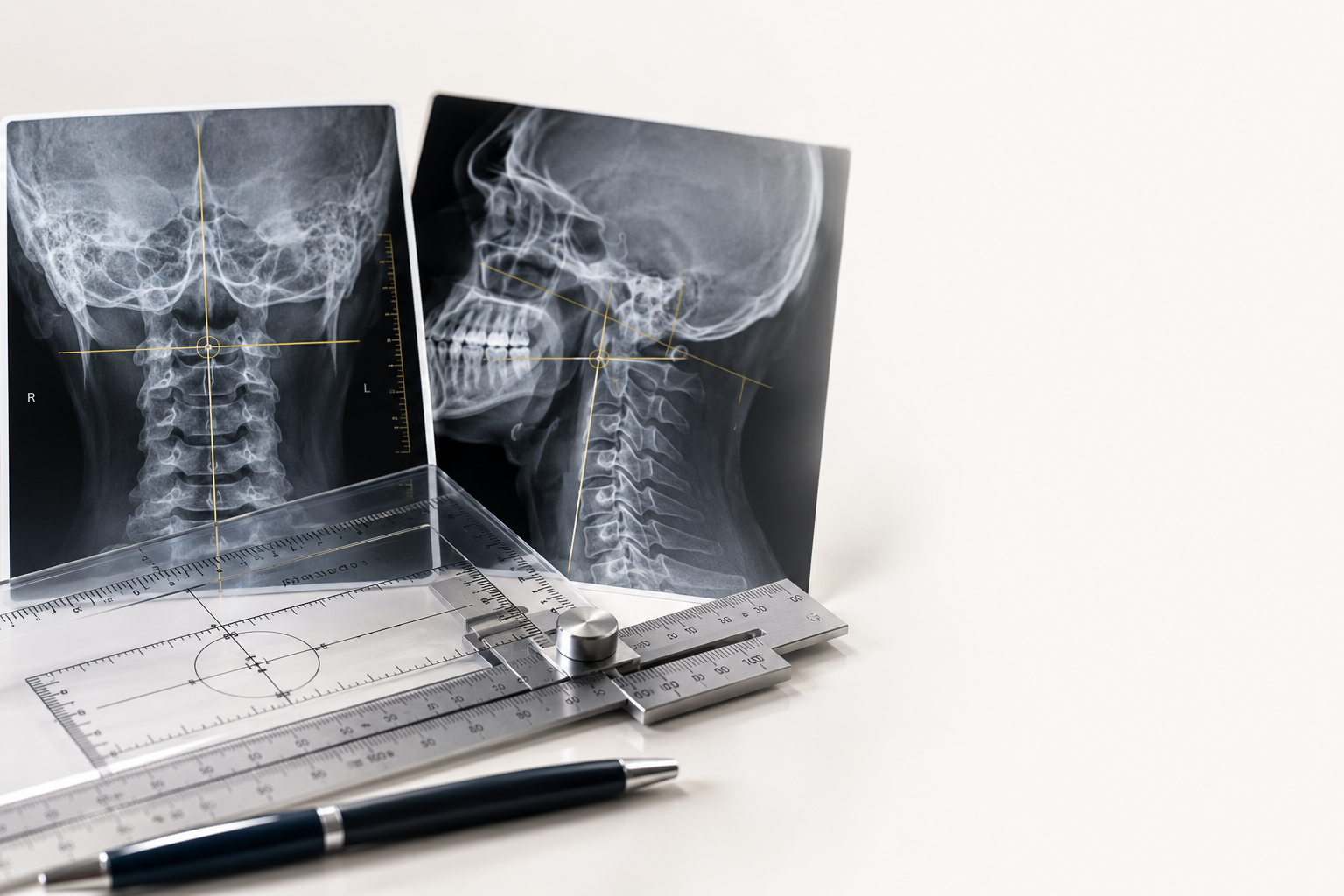
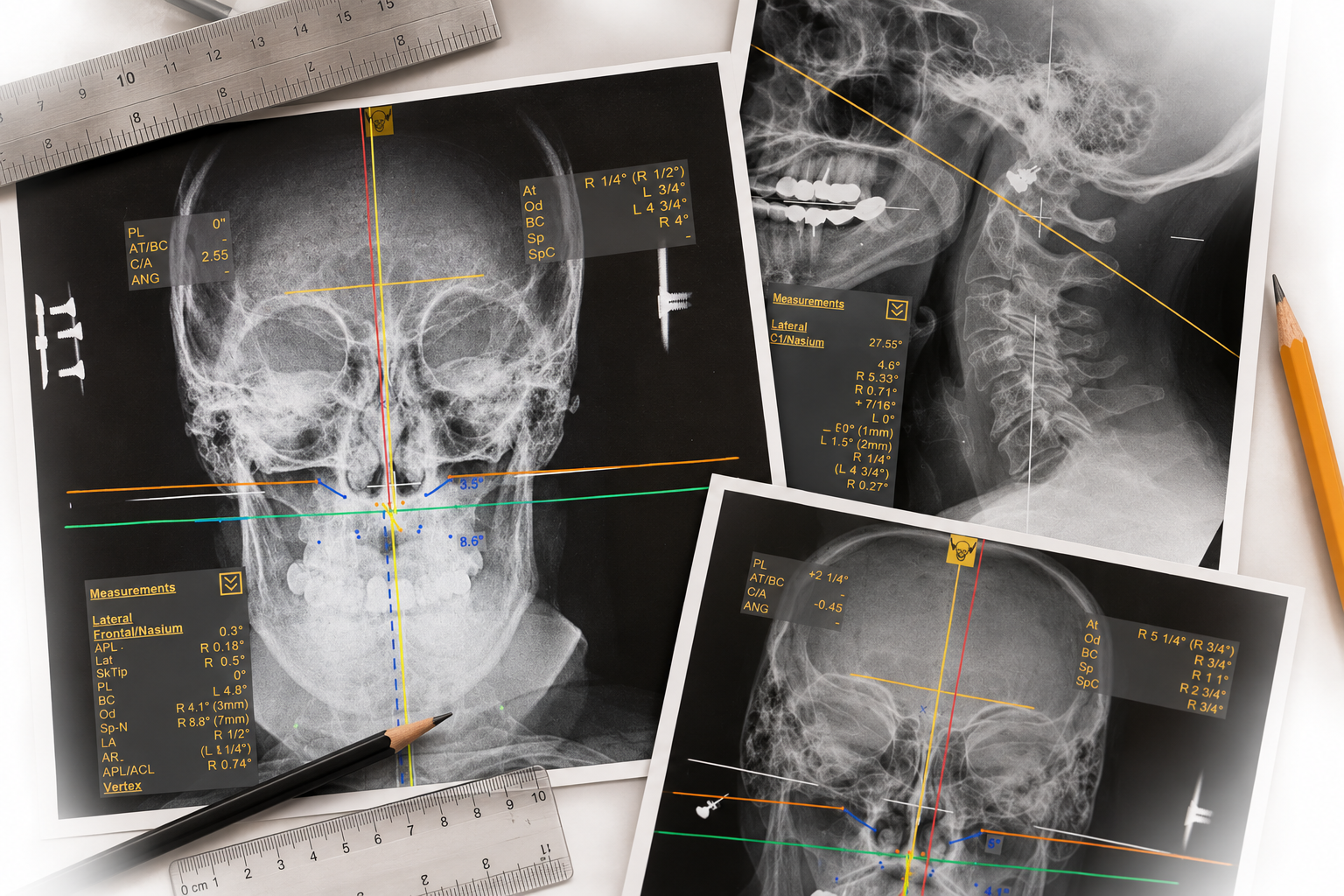
When clinically indicated, detailed imaging and measurements can be used to study the relationship between the skull, atlas and cervical spine and plan an individualized correction.
Correct
The NUCCA correction is delivered with a carefully calculated direction and very light force. There is no rapid twisting, pulling or forceful manipulation of the neck.
Reassess
After the correction, Dr. Gordon reassesses the findings he identified beforehand. The response helps guide what happens next rather than simply repeating the same procedure.
Because the upper cervical spine is not a simple region. The anatomy is unique, the joints move differently from the rest of the neck, and small differences in position can change the way the head and cervical spine relate mechanically.
After more than two decades working with upper cervical patients, Dr. Gordon's approach is not to do more — it is to be more specific about what he does.
One of the things patients often find surprising about NUCCA is how gentle the correction feels. The force can be light because the direction of the correction has been carefully considered beforehand.
Precise Doesn't Have to Mean Forceful
A NUCCA correction is very different from what many people picture when they think about a chiropractic adjustment. There is no rapid twisting of the neck and no forceful manipulation.
Instead, the patient rests comfortably while Dr. Gordon contacts a specific area of the upper neck and delivers a carefully directed correction using light, controlled pressure.
The correction itself may look surprisingly simple. What makes it different is the analysis that came before it — determining where, how and in what direction the correction should be made for that individual patient.
The examination, measurements and analysis are what allow Dr. Gordon to use a highly specific approach rather than simply applying more force.
Afterward, Dr. Gordon reassesses the findings that led to the correction in the first place. That feedback helps determine how the upper cervical region has responded and what should happen next.
No Twisting
The neck is not rapidly rotated or twisted during the NUCCA correction.
Light Force
The correction uses controlled pressure directed according to the patient's individual analysis.
Reassessed
Dr. Gordon checks the patient again afterward rather than assuming the correction produced the intended change.

Could Your Upper Neck Be an Overlooked Part of the Picture?
Sometimes the most useful next question isn't simply “Where does it hurt?” — but whether an important part of the problem has been adequately investigated.
“Has anyone taken a really close look at the relationship between my head and upper neck?”
Many of the people who come to Dr. Gordon aren't looking for their first answer. They have often been dealing with a problem for some time and have already tried reasonable approaches directed at the area where they feel their symptoms.
That's where a different perspective can be valuable. The upper cervical spine is a small, specialized region that may not always receive a detailed mechanical assessment.
With more than two decades focused on upper cervical care, Dr. Gordon examines this area closely to determine whether dysfunction in the relationship between the skull, C1 and C2 may be an important piece of the patient's clinical picture.
When he finds something significant, NUCCA provides a precise way to address it. When he doesn't, that information matters too. The purpose of the assessment is to understand what is actually happening rather than simply assume the upper neck is involved.
Why do people start looking at the upper cervical spine?
Explore some of the concerns that bring patients to Dr. Gordon and learn why the relationship between the head and neck may deserve closer attention.
You don't need to know whether your upper neck is involved before you come in.
That's what the consultation and assessment are for. Dr. Gordon can listen to what you've been experiencing and help determine whether a closer upper cervical evaluation makes sense.
Upper Cervical Care Was Part of the Plan From the Beginning
NUCCA wasn't something Dr. Gordon discovered halfway through his career. It helped shape the kind of chiropractor he set out to become.
Dr. Gordon's interest in human movement began before chiropractic. He studied kinesiology at Mount Royal College — now Mount Royal University — before continuing his education at Palmer College of Chiropractic.
By the time he entered chiropractic college, Dr. Gordon already knew that he wanted to study NUCCA and the upper cervical spine. In fact, the opportunity to pursue NUCCA alongside his core chiropractic education was one of the reasons he chose Palmer.
He began learning and applying the NUCCA procedure while working with patients in Palmer's student clinics and graduated on the Dean's List in 2004.
“NUCCA wasn't something I added to my practice. It was part of the kind of chiropractor I wanted to become from the very beginning.”
A Lifetime Interested in Movement
That interest in movement has never been purely academic. Dr. Gordon has been an athlete throughout his life, competing in boxing before moving into distance running, marathons and triathlon, and later into competitive road cycling.
As a cyclist he competed at a high level and earned numerous podium finishes. Today, that passion for sport continues in a different way through coaching Little League baseball.
Those experiences have given Dr. Gordon a perspective on movement from both sides — studying and treating the human body clinically, while also spending decades asking his own body to perform.
After more than two decades devoted to upper cervical care, Dr. Gordon brings something to each assessment that cannot come from a textbook alone: experience.