Vertigo & Dizziness · Calgary
Could Your Neck Be
Part of the Picture?
Vertigo and dizziness can have many different causes. For some people, the cervical spine may be one part of the clinical picture. Dr. Cody Gordon assesses the upper cervical spine to determine whether dysfunction in this region may be relevant to your symptoms.
Calgary, Alberta
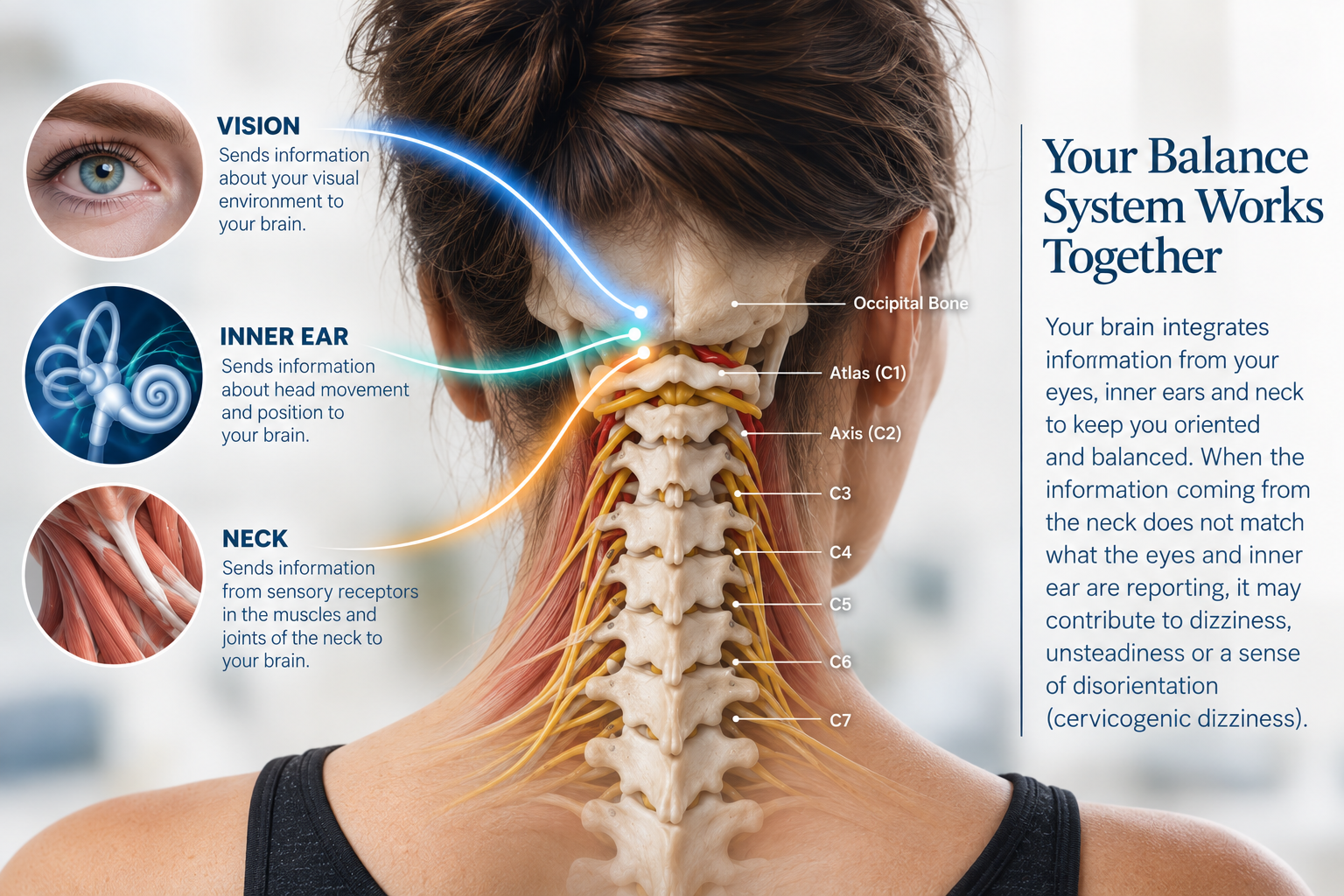
When Dizziness May Be Coming From the Neck
Your Neck Is Part of Your Balance System
Your sense of balance depends on your brain receiving accurate information from several systems at the same time — including your eyes, inner ears and sensory receptors in your muscles and joints.
The upper cervical spine contains a particularly rich network of sensory receptors involved in telling the brain where the head is positioned in relation to the body.
When information coming from the neck does not match what the eyes and inner ear are reporting, one proposed result is a sense of dizziness, unsteadiness or disorientation. This is commonly described as cervicogenic dizziness.
People with suspected cervicogenic dizziness often describe more than simply “the room spinning.” They may notice unsteadiness, a floating or off-balance sensation, dizziness associated with neck movement, neck stiffness or pain, or symptoms that began following an injury involving the head or neck.
Because dizziness can have many different causes, the goal is not to assume that every case is coming from the neck, but to determine whether the cervical spine may be one part of the clinical picture.
Video: Dr. Gordon Explains Cervicogenic Dizziness
A Different Approach to the Upper Cervical Spine
Where NUCCA Fits In
NUCCA focuses specifically on the relationship between the head and upper cervical spine — particularly the atlas (C1) and axis (C2).
Rather than assuming that dizziness is coming from the neck, Dr. Gordon evaluates the upper cervical region for mechanical findings that may indicate it should be considered as part of the clinical picture.
When appropriate, NUCCA uses a gentle, highly specific correction designed to improve upper cervical alignment and mechanics without twisting, cracking or forceful manipulation of the neck.
The question isn't simply:
“Do I have vertigo?”
It may also be worth asking:
“Could my neck be contributing to what I'm experiencing?”
Book a Consultation →Could Your Neck Be Contributing to Your Dizziness?
Dizziness and vertigo can have many causes. Answer 6 quick questions to see whether your neck may deserve a closer look.